







Last month, I wrote an article about being too direct, and I received a lot of feedback from many of you who could relate to my struggles.
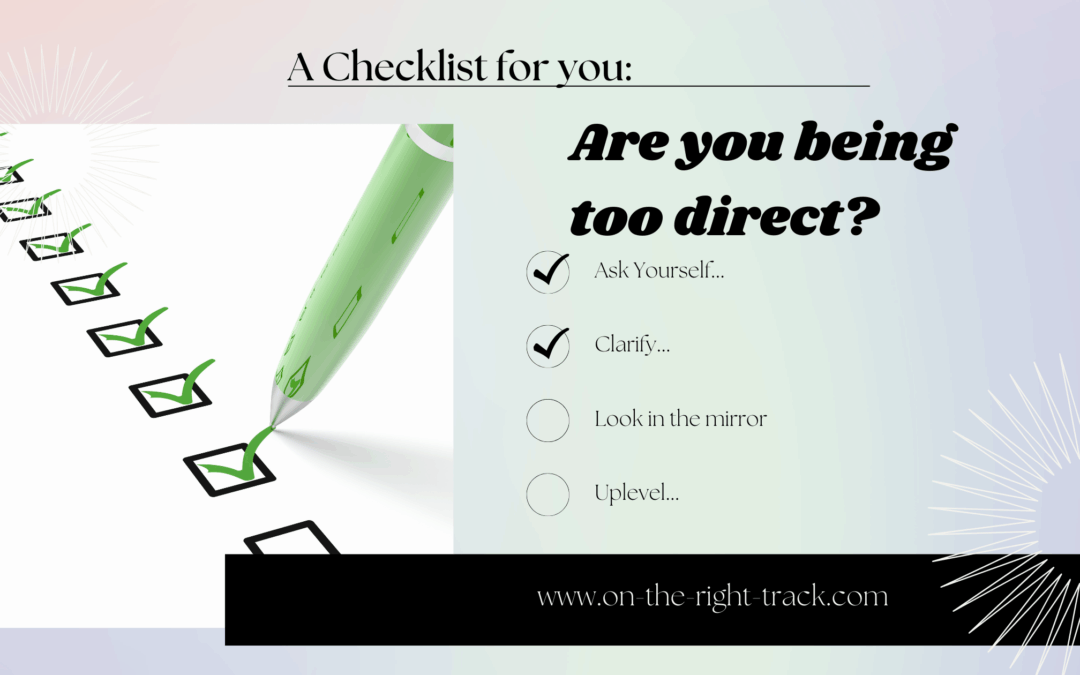
To make life a little easier, I thought it would be helpful to give you an easy-to-refer checklist to ensure you are a strong communicator and respectful (and don’t cross the line too aggressively).
BEFORE you hit send (or speak to someone), ensure you can answer these three questions:
Þ Ask yourself: How would I feel if someone said this to me? Realize you won’t hear the ‘back story’ or the intent, but the actual words. Ensure you don’t justify your words. Hear yourself saying it with a harsh tone just in case that is how they hear it (even though that wasn’t your intent)
Þ Clarify: What is the purpose of this statement? What is my goal? Based saying these words, what do I expect the other person to do or feel once they hear it?
Þ Look in the mirror: Check out your emotional state. If you are trying to communicate when you aren’t in the right state of mind, you won’t do very well. Are you stressed, frustrated, rushed, or annoyed? Will those emotions come through in your message? (hint: Yes).
Soften, don’t weaken. You want to ensure that you are still clear and direct. You don’t want the edge of aggression to sneak into your message, so it is essential that we can be direct by softening yet not weakening the message. You don’t have to change who you are, but you need to ensure that what you are trying to say will be heard the way you meant it to be heard.
Þ Us “I” language instead of “you” language. Please stay away from blame and instead replace it with ownership. “You” statements are received as accusations.
Þ Uplevel your politeness. Ensure you are respectful and add simple “please and thank yous” or “hope you’re having a good day” to your routine communication. Respect can be felt through simple word choice, so be respectful and polite. This doesn’t mean you need to go over the top with praise, as it will instantly feel inauthentic and manipulative.
Þ Sample phrases that allow you to soften without weakening are:
o Would you be able to …?
o Can we work together on this?
o Let me know if you need anything from me
o Thanks for your attention to this. It is important and has a very tight timeline
“Can you” sounds so much better than “you need to”.
We have all likely heard the expression to be kind. You can be clear and kind at the same time; they are not mutually exclusive. Being kind does not mean we are trying to shut the other down; it means we are trying to move forward.
“People will never forget how you made them feel” by Maya Angelou is my all-time favorite quote.
I want to be a clear communicator. I can be direct and not hurt feelings or make others feel their thoughts don’t matter. By keeping this checklist nearby and referring to it (especially in times of high consequence), you can ensure you are communicating directly without crossing the line too aggressively.
This article was written by Rhonda Scharf and not be artificial intelligence.